
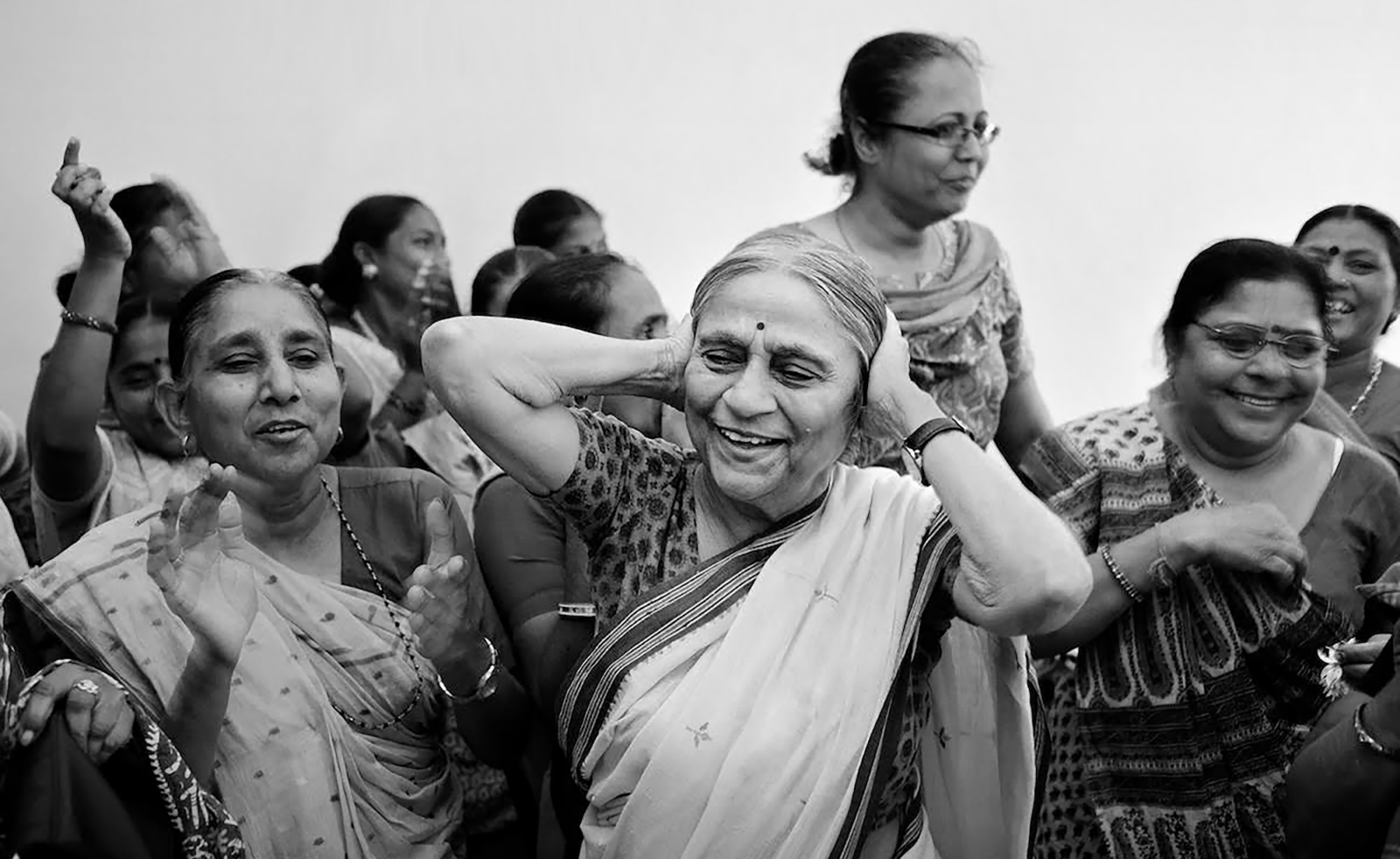
Context for the exhibition, the movement behind it, and the stories of working women whose collective action has shaped Hum Sab Ek.
This exhibition is inspired by the actions of poor working women in India, who have survived societal and state indifference through half a century of relentless organizing. Hum Sab Ek Hai (We Are One) is the rallying cry of the nearly 3 million strong Self Employed Women’s Association, thriving at the confluence of the labor movement, the cooperative movement, and the women’s movement.
The installations, designed by SEWA’s members and graduate students from across Harvard, are based on research comprising 30 hours of oral histories and a survey of over 1000 households, examining the impact of the pandemic on the lives of the poor.
The story of SEWA’s response to the pandemic is important because it unveils alternative imaginations of social contracts, mutual obligations, and dignity in work. Fifty years of empowering women, and of centering the needs of the poor in all decision-making, allowed the women to navigate the greatest public health emergency of our times when dominant political, economic and social structures failed them. During the pandemic, SEWA’s members overcame the digital divide, contested unjust state policies, mitigated growing food insecurity, led vaccination drives, educated their children, protected wages, and even launched a new insurance product to protect their workers from extreme heat. Unburdened by the luxury of confirmation, they did what was expedient, that benefited others, and harmed none. These lessons, from the poorest amongst us, remind us that the new paradigms we seek to replace the current rules of engagement, are already in bloom.