The circular economies that supported nomadic and rural communities in Gujarat’s harsh terrain faded with the arrival of the East India Company. By the 19th century, the British Crown had subjugated the subcontinent, and the power looms in Ahmedabad were serving the needs of the Empire.
The spinning wheel or charkha re-emerged in the national consciousness when it embodied Mahatma Gandhi’s call for self-rule and eventually became a potent symbol of the Indian independence struggle.
In recent years, mechanization, digitization, and globalization have flooded the domestic market with affordable look-a-likes that many consumers find hard to distinguish from the more expensive but exquisite handmade textiles. Discerning consumers, including global designer brands, however, continue to support and promote these local artisans, many of whom work from their homes. The disruption of the global supply chain in 2020 annihilated demand for these exquisite crafts, imperiling the lives of home-based artisans across India.

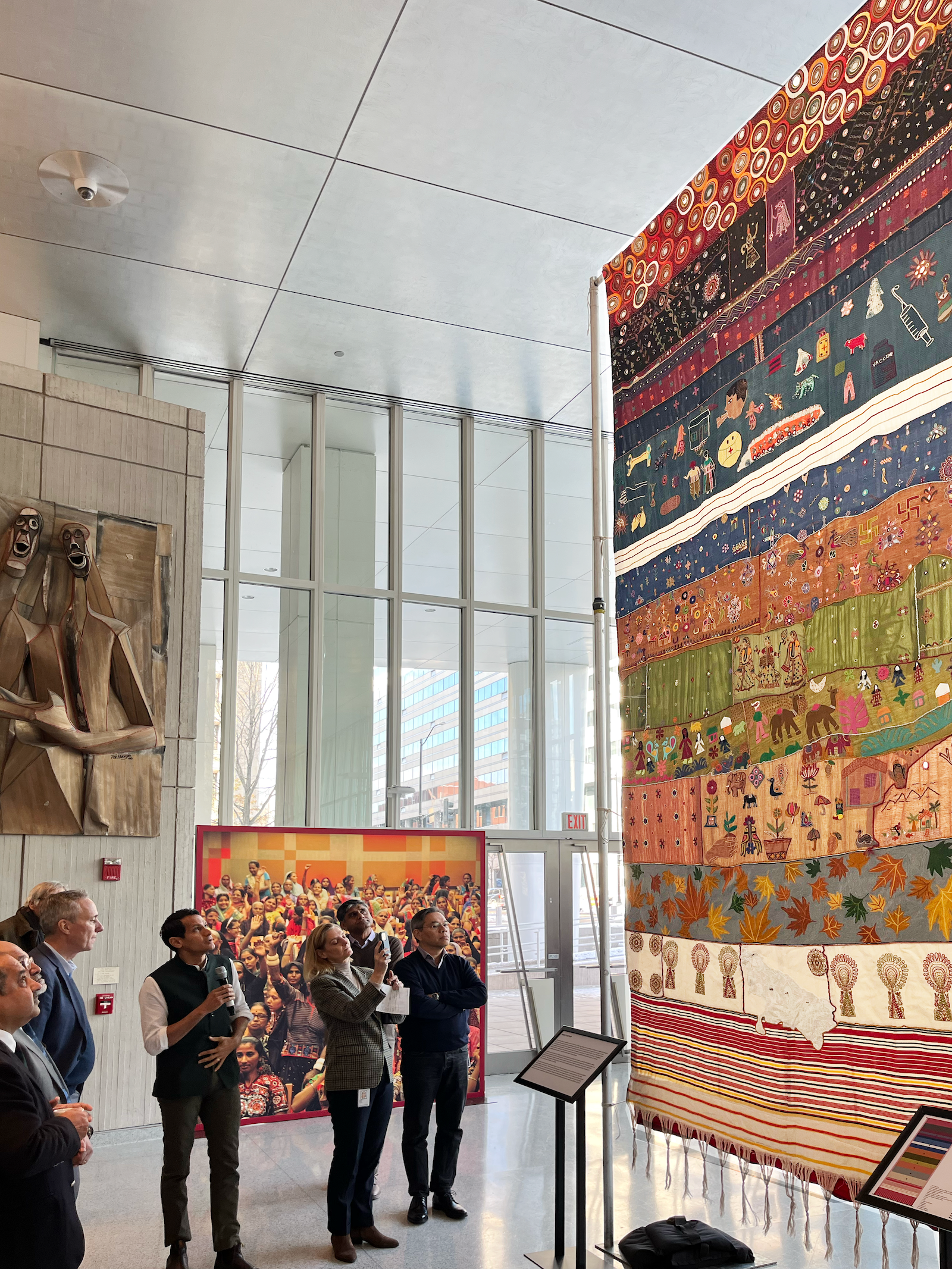
Woven Together, a 19 ft × 8 ft tapestry reflecting textile traditions from 18 Indian states, was commissioned for the exhibition, and made by over 50 SEWA members from across India.
Gallery: World Bank Headquarters, Washington, D.C., December 2025.
Gallery: World Bank Headquarters, Washington, D.C., December 2025.
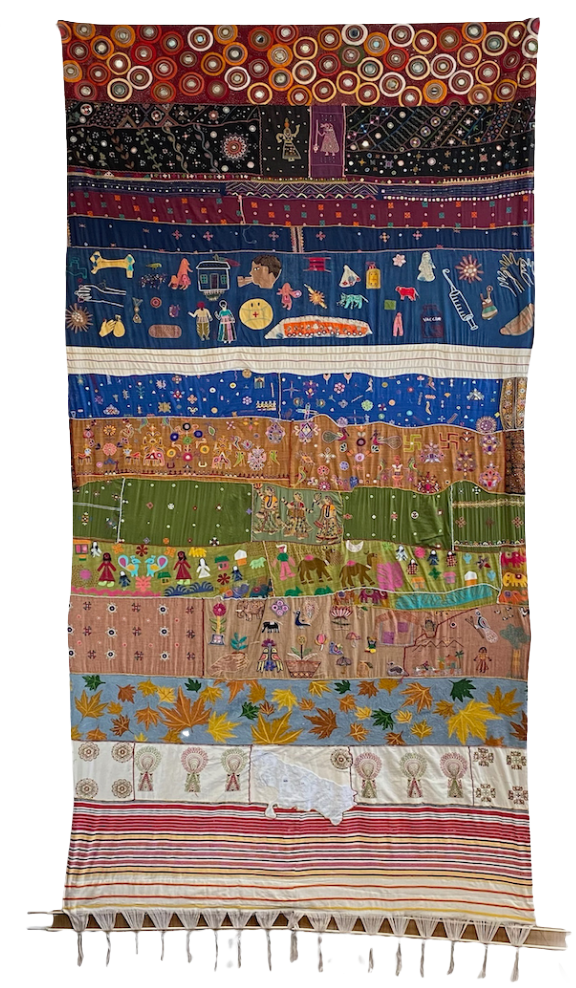
This textile was made by the Self Employed Women Association's (SEWA) home-based artisans from across India. Each pattern is a unique signature of the region or community from which the artist hails.
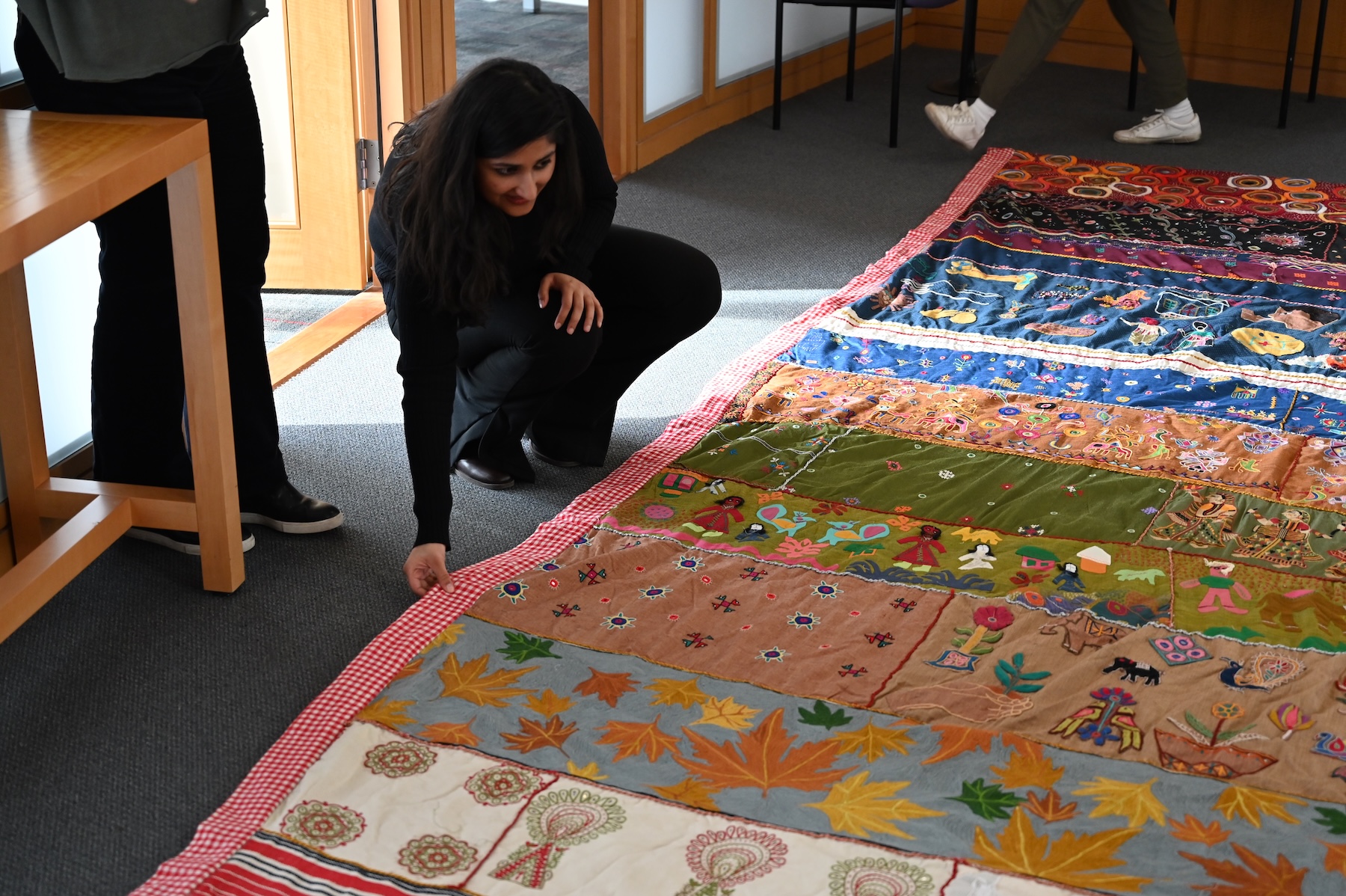
Hiteshree Das, co-curator and design lead for Hum Sab Ek, views the woven textile before it is installed in the exhibition.
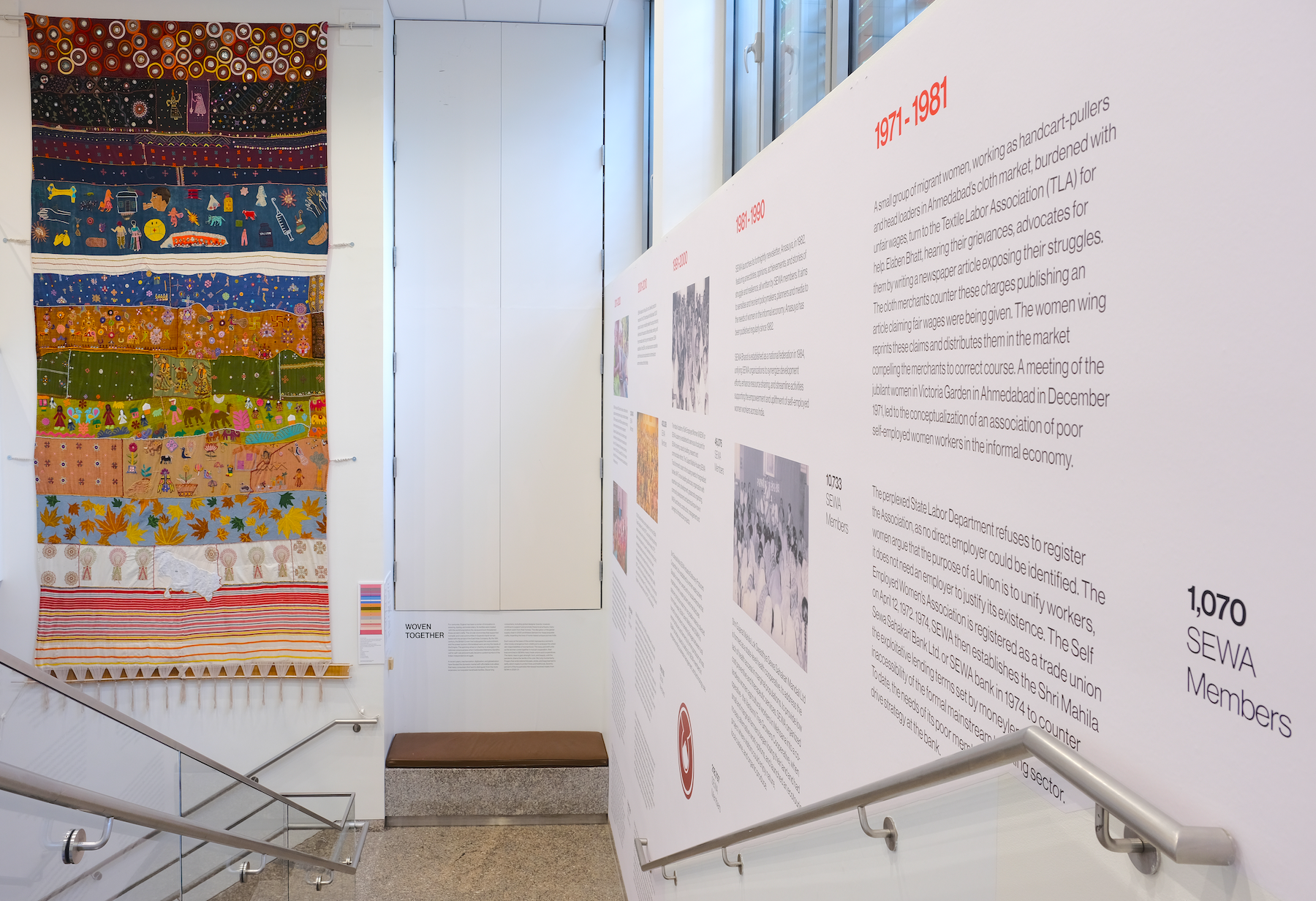
The complete woven textile was previously on view in the Hum Sab Ek exhibition at Harvard University in Cambridge, Massachusetts.