Red Zone
In India's crowded urban areas, the pandemic magnified existing hardships, with strict lockdowns, rising violence, and isolation eroding the vital networks of support people depended on.
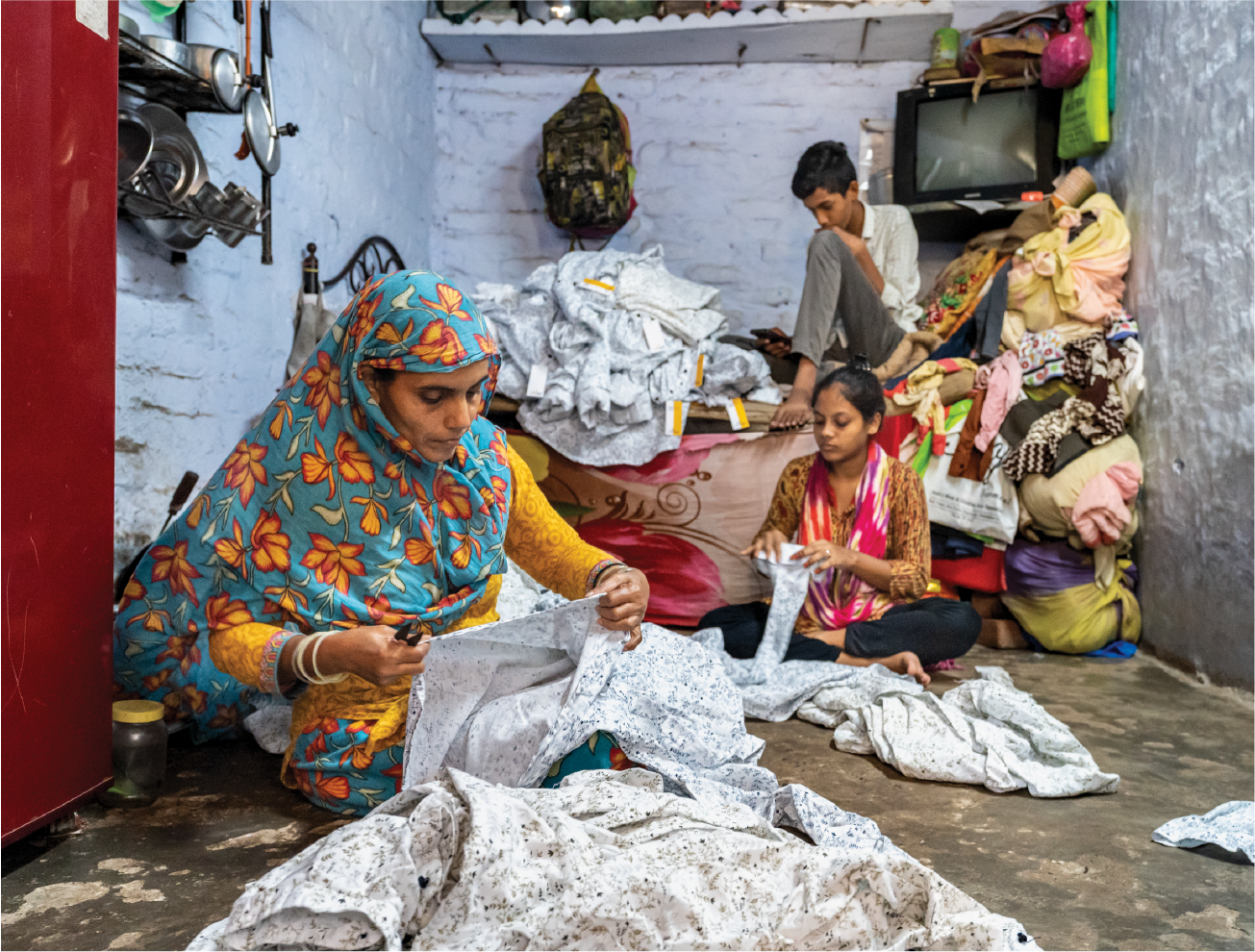
In India's urban cores, millions inhabit densely packed one-room dwellings that serve as homes and workspaces. Often less than nine square meters each, they house an average of five people. These shunned neighborhoods of the poor are the crucible of India's dreams, where physical distancing is impossible, and social distancing unimaginable.
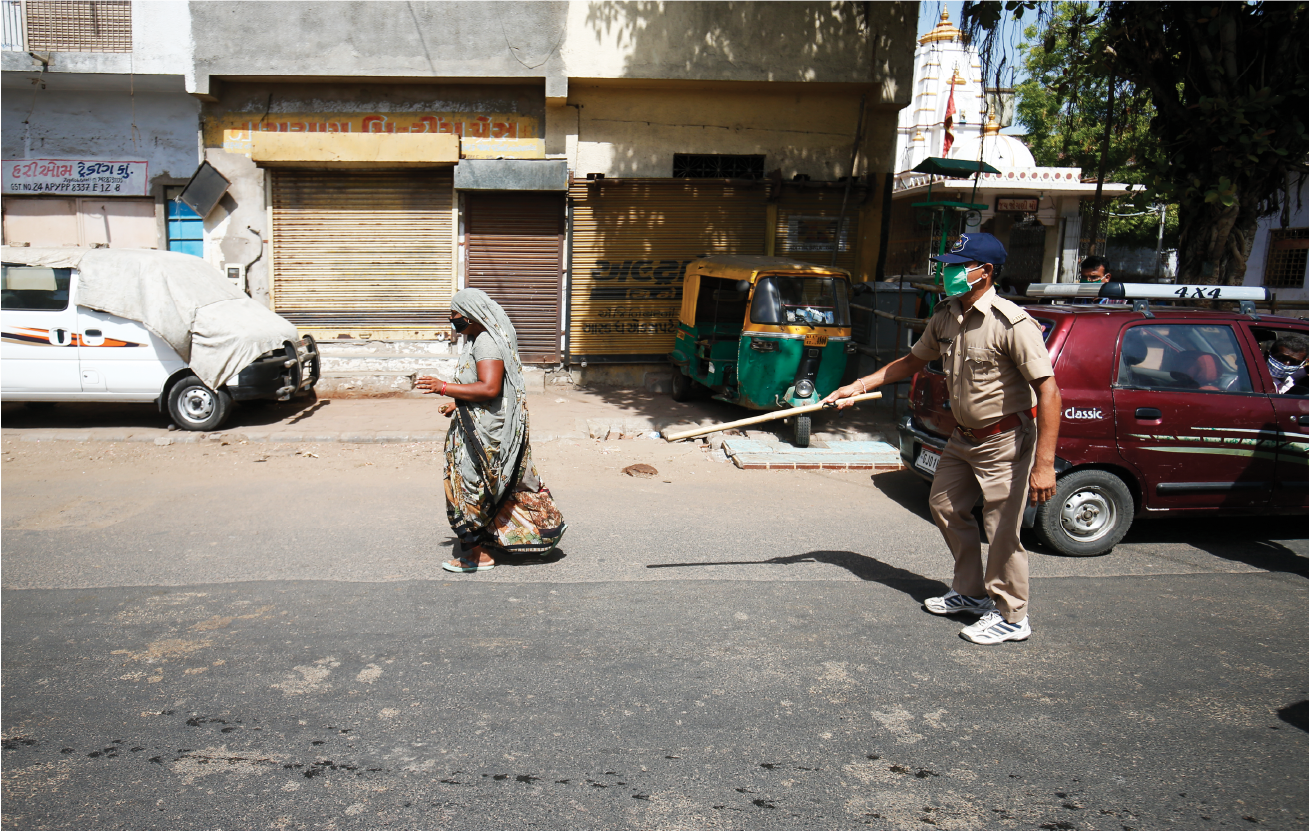
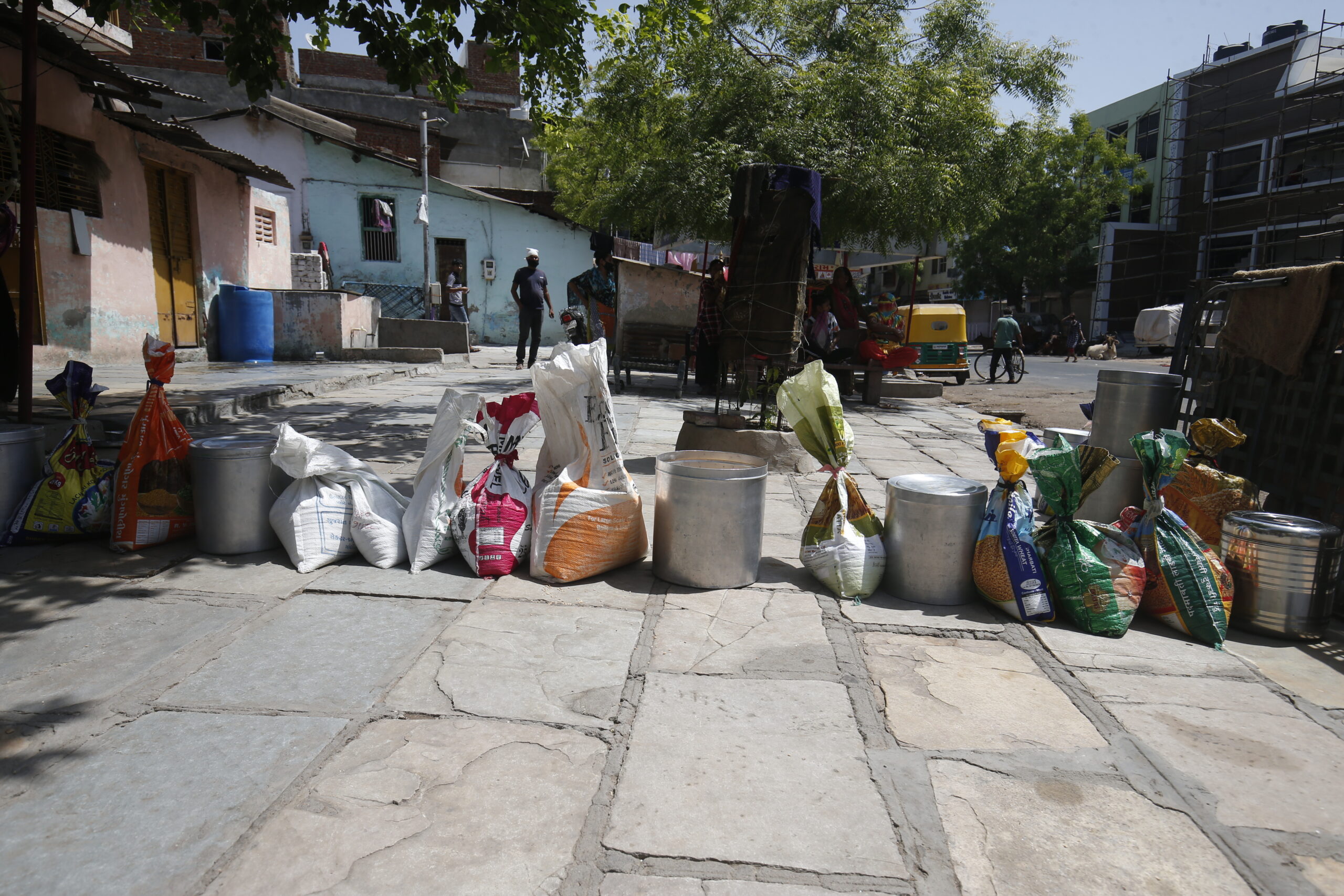
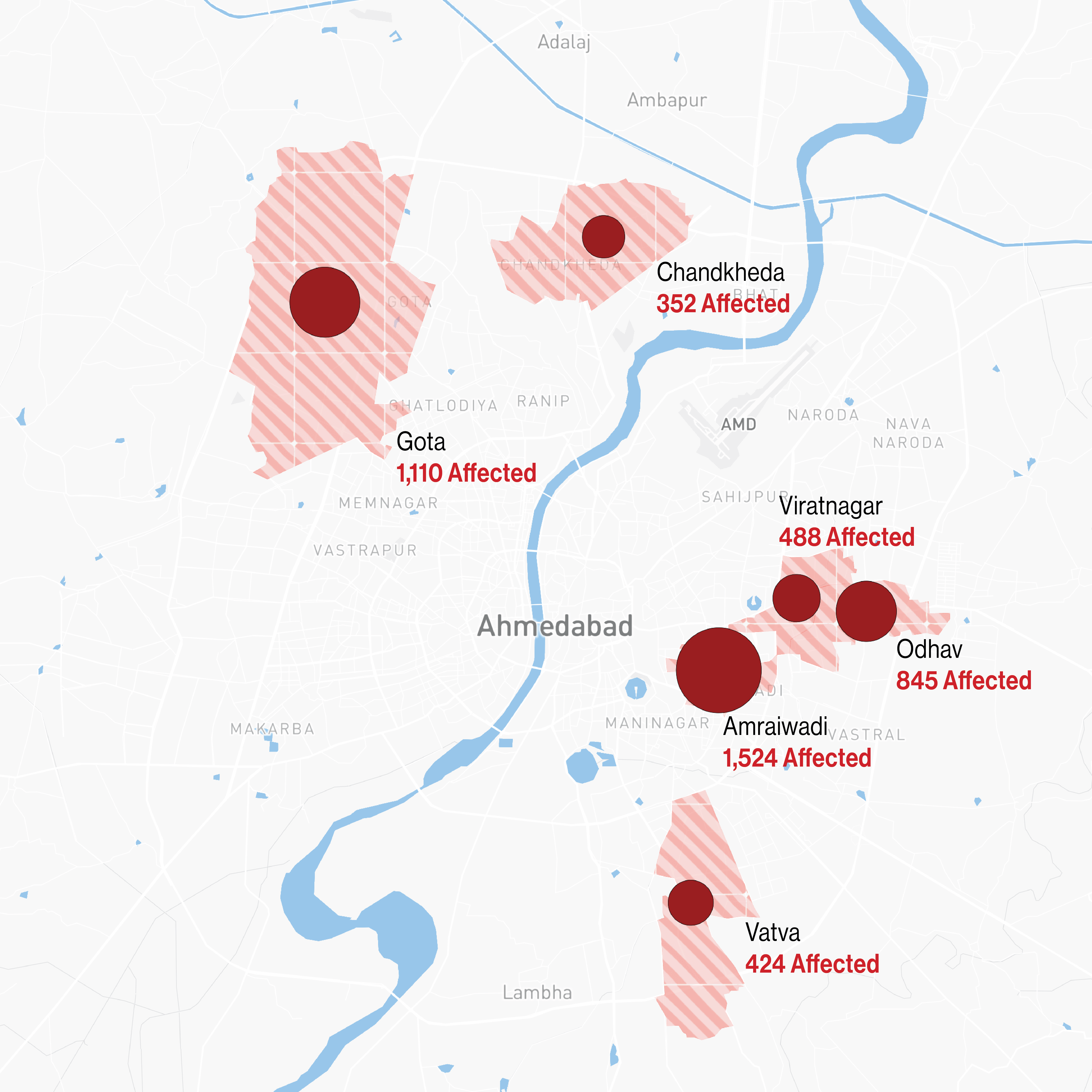
Imperfect data and questionable policy choices resulted in entire neighborhoods being marked as Red Zones, and their inhabitants barricaded from their surroundings. As migrants returned home, children stayed home from school, and summer temperatures rose, the cramped quarters — normally a respite from the outside world — suffocated their inhabitants.
By April, domestic violence was on the rise. Stepping outside invited police brutality. At SEWA, the anxieties and uncertainties fueled by a novel disease and unprecedented restrictions on life were compounded by the women's inability to be physically present for each other in times of distress. Even amidst natural disasters and communal riots in the state of Gujarat, solidarity had first been expressed simply by showing up, and by bearing witness. Isolation had never been a remedy.
Average Household Area in Cities
The Mathematics of Inequality
These numbers represent more than square footage; they reflect access to privacy, health, and human dignity.
In Mumbai, where
40% of residents live in informal housing,
families often share extremely small spaces. The density creates cascading health risks: illnesses spread rapidly, privacy becomes impossible, and children lack quiet spaces essential for learning and development.
Ahmedabad COVID-19 Red Zones
Designated Red Zones:
Oral Histories from the Villages
Voices from the Red Zone
Deenaben Parmar, Lalitaben Vasava, Bhavnaben, and Savitaben Parmar share powerful testimonies of resilience and solidarity during the pandemic's most challenging period. The women describe cascading impacts of COVID-19 in their villages and their role in maintaining community health and social cohesion.